
What is a Moroccan Hammam? Traditional Spa Ritual Steps & Benefits
What is a Moroccan Hammam?
A Moroccan hammam is a traditional steam bath and cleansing ritual that has been practiced in Morocco for centuries. More than just a bath, the hammam is a purifying spa experience that combines heat, exfoliation, clay masks, and nourishing oils to deeply cleanse, detoxify, and rejuvenate the skin.
Traditionally performed in communal bathhouses, the hammam ritual is a cornerstone of Moroccan wellness culture, passed down through generations as both a beauty treatment and a social tradition.
How to Do a Moroccan Hammam at Home: The Complete Step-by-Step Ritual
If you've ever experienced a traditional Moroccan hammam, you'll know there's nothing quite like it. The deep warmth, the steam, the ritual of slowly exfoliating away every trace of dead skin until you emerge feeling like a completely new person. It's one of the oldest beauty rituals in the world — and the good news is you don't need to travel to Marrakech to do it.
With the right products and a little time, you can recreate the full Moroccan hammam experience at home in under an hour. This guide walks you through every step, exactly as it's done in a traditional hammam.
The hammam ritual has been practised across Morocco and North Africa for centuries — not just as a beauty treatment, but as a weekly ritual of cleansing, community and self-care. Here's how to bring it into your own home.
What You'll Need
Before you start, gather everything together so the ritual flows without interruption:
- Moroccan black soap (Beldi soap) — the foundation of the ritual
- A kessa exfoliating glove — this is non-negotiable for real results
- Ghassoul (Rassoul) clay — for the mask step
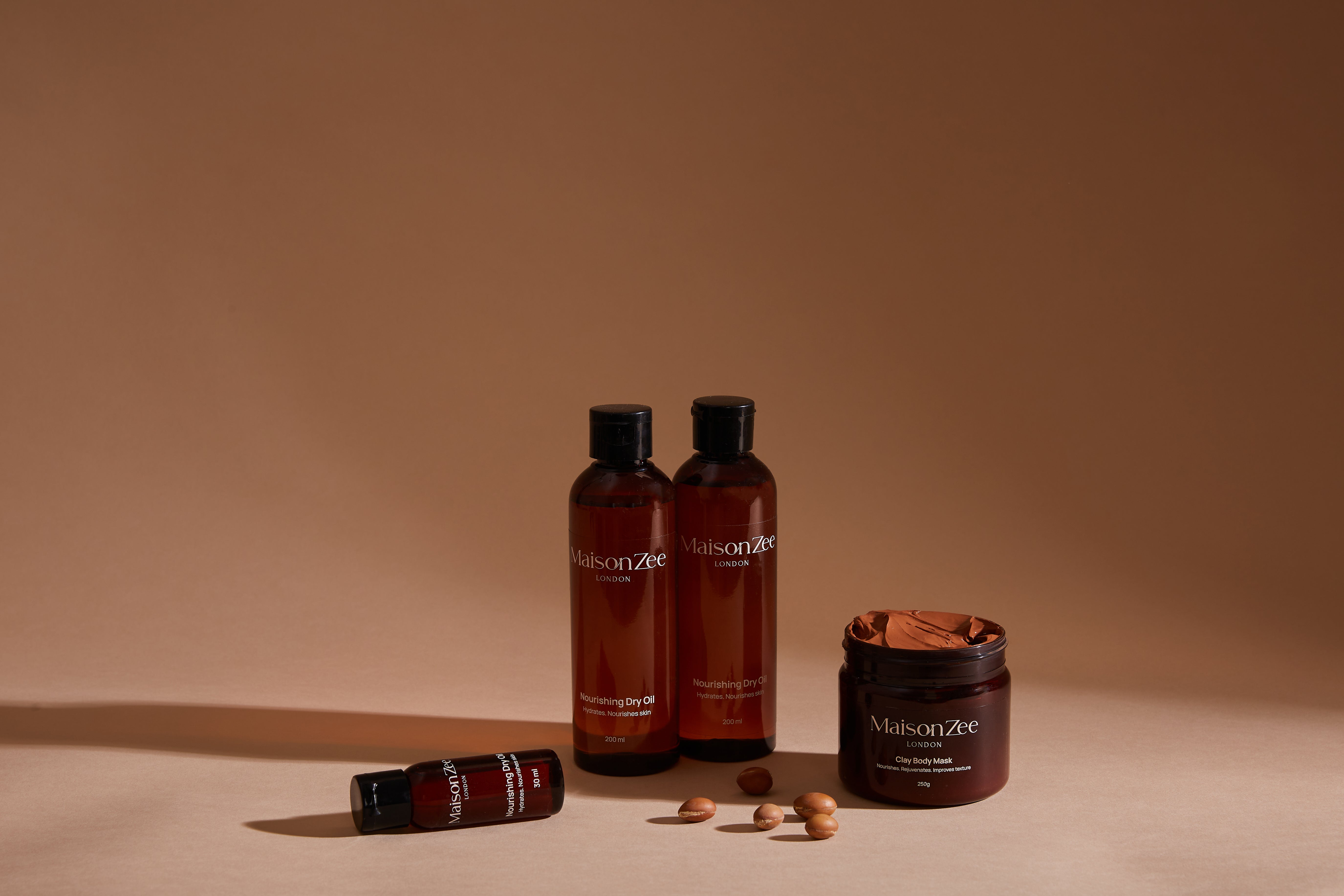
- Argan dry oil — for the final nourishing step
- A warm shower or bath
- Two towels — one for drying, one to wrap up in afterwards
You don't need a steam room or a hammam building. A hot shower works perfectly — the steam it generates is enough to open your pores and prepare your skin for exfoliation.
Step 1: Warm and Soften Your Skin (5–10 minutes)
Start with a warm shower or bath. The goal here isn't to wash — it's to warm your skin, open your pores and soften the outer layer of dead skin cells so they're ready to be removed.
Stay in the warm water for at least 5 minutes. The hotter the better, within comfort. If you have a bath, soaking for 10 minutes works even more effectively.
Do not use any soap or shower gel at this stage. You want your skin slightly damp and warm, not squeaky clean. Adding soap now would close the pores and reduce the effectiveness of the exfoliation to follow.
Step 2: Apply Moroccan Black Soap (5 minutes)
Moroccan black soap — known as Beldi soap — is made from olives and is nothing like the soap you're used to. It's a soft, paste-like texture and it works by deeply softening the bond between dead skin cells and the fresh skin beneath.
Apply a small amount (about a teaspoon) across your body while your skin is still warm and damp. You don't need to lather it up — simply spread a thin layer over your arms, legs, stomach, and back.
Leave it on for 3–5 minutes. This is where the magic begins. The black soap is doing the work of loosening everything that your kessa glove is about to remove.
|
Tip: If your skin is very dry or sensitive, you can leave the black soap on for up to 10 minutes for a deeper softening effect. |
Step 3: Exfoliate with the Kessa Glove (10–15 minutes)
This is the heart of the hammam ritual — and the step that produces results unlike anything you can achieve with a regular body scrub.
Put on your kessa glove and begin using long, firm strokes on damp skin. Start with your arms, then move to your legs, stomach and back. You'll notice almost immediately that rolls of grey, dead skin begin to lift away from the surface. This is completely normal — and incredibly satisfying.
Key technique tips:
- Use firm, long strokes in one direction — don't scrub back and forth
- Work on each area for 30–60 seconds before moving on
- Apply more pressure on rougher areas like knees, elbows and heels
- Be gentler on the chest and stomach
- Rinse the glove under warm water every minute or so to clear the dead skin
Avoid the face entirely, the kessa glove is designed for the body only. For facial exfoliation, use a dedicated facial product.
After 10–15 minutes, rinse your body thoroughly under warm water to remove all the loosened skin and black soap residue.