

May 18, 2024
Ghassoul Clay: Benefits, How to Use It, and Why It Beats Bentonite for Sensitive Skin
What is Ghassoul Clay?
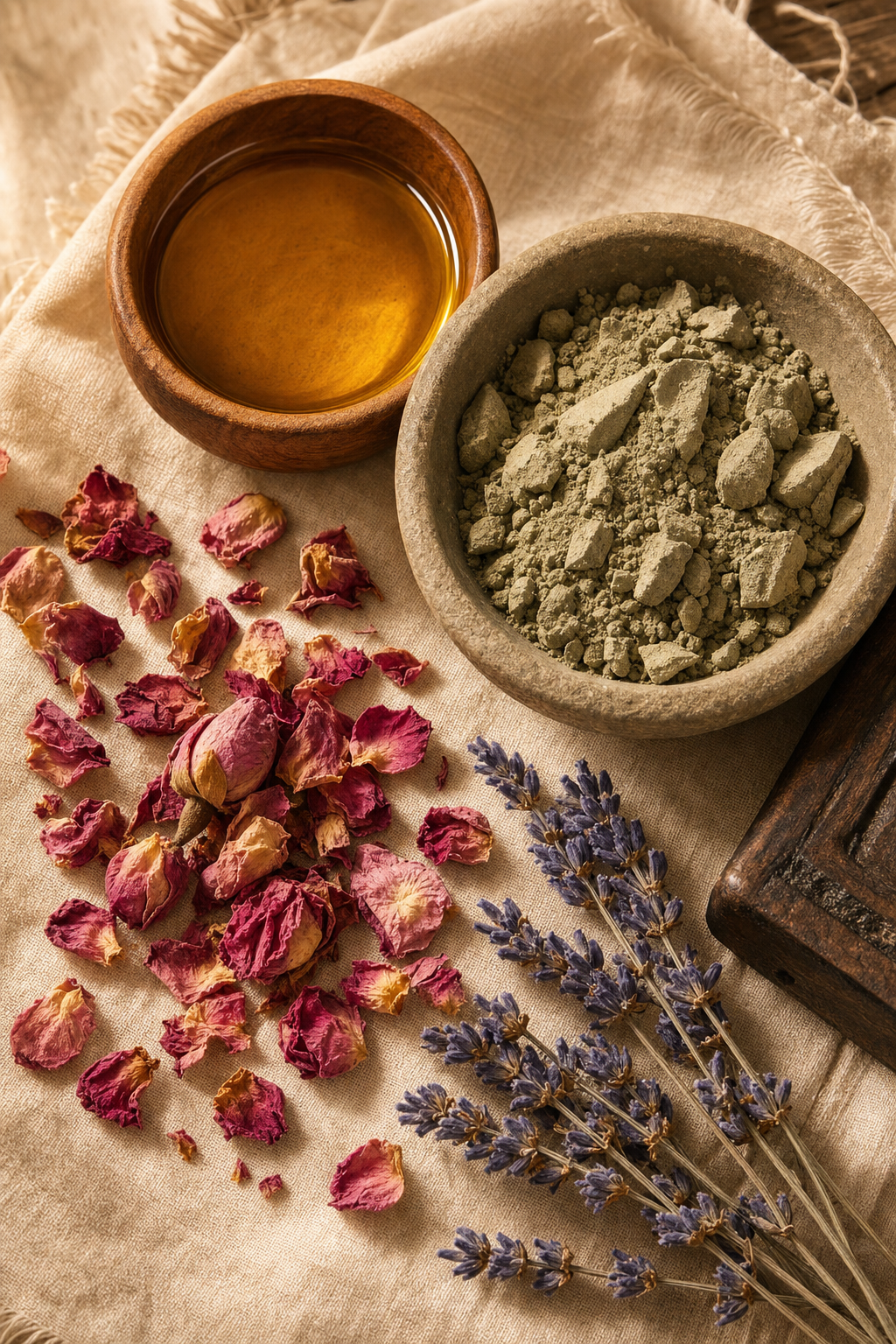
Ghassoul — also spelled rhassoul or rassoul — is a rare mineral clay mined from a single valley in the Atlas Mountains of eastern Morocco. The name itself comes from the Arabic verb "ghassala," meaning "to wash." For over a thousand years, Moroccan women have used it as a cleanser for skin and hair, in the hammam and at home.
Unlike most clays, which work primarily by absorption, ghassoul cleanses through ion exchange — meaning it draws impurities and excess oil out of the skin while leaving its natural moisture barrier intact. That is what makes it unusually gentle for a clay this effective.
The Real Benefits of Ghassoul Clay
- Draws out impurities, sebum and pollution without stripping
- Unclogs pores and reduces breakouts — gently enough for daily use
- Softens skin in a single use — minerals leave it visibly smoother
- Tones and refines without redness, unlike harsh clays
- Works on hair too — removes product buildup without drying
- Calms inflammation, eczema-prone skin, and rosacea-style flushing
Ghassoul vs Bentonite Clay: Which is Better?
Bentonite gets a lot of attention in the skincare world — and yes, it is highly absorbent. But that absorption is also its main drawback: bentonite pulls hard, and on sensitive or already-dry skin it can leave the surface stripped, red and tight.
Ghassoul works differently. It is rich in magnesium, silica, potassium and calcium — minerals the skin actually uses. It cleans through gentle ion exchange instead of sheer suction, which means even people with rosacea, eczema or generally reactive skin tolerate it well.
In short: is great for oily, acne-prone skin that can take a strong pull. Ghassoul is what you reach for if your skin is sensitive, dry, mature, or you just want to keep things in balance.
How to Use Ghassoul Clay as a Face Mask
What you will need
- 1 tablespoon ghassoul clay powder
- 2 tablespoons rose water (or plain warm water)
- A non-metallic bowl (metal interferes with the clay)
- A soft brush or your fingertips
The ritual
Mix the ghassoul with rose water in your bowl until you have a smooth, spreadable paste — the texture of melted chocolate. Apply a thin, even layer to clean, dry skin, avoiding the eye area.
Leave on for 5–10 minutes. Do not let it dry hard and crack — ghassoul does its best work while still slightly damp. Mist your face with water if it tightens.
Rinse off with warm water in circular motions — this gives you a light secondary exfoliation. Pat dry and follow with a few drops of argan oil. The skin afterwards is the part everyone remembers: soft, even, almost lit from inside.
How Often Should You Use Ghassoul?
- Oily / combination skin: Twice a week
- Normal skin: Once a week
- Dry or sensitive skin: Once every 7–10 days
- As part of a Moroccan hammam ritual: Once a week, full body
Ghassoul for Hair
This is one of the lesser-known uses outside Morocco, and it is one of the best. Mix ghassoul with warm water to a slightly looser paste than the face mask, and massage into wet hair and scalp. Leave for 5 minutes, then rinse thoroughly.
It removes product buildup, calms an itchy scalp, and leaves hair noticeably softer — without the squeaky-clean stripped feel of a clarifying shampoo. Many Moroccan women use ghassoul instead of shampoo entirely, once a week.
Who Should Avoid Ghassoul?
Almost no one — it is one of the most universally tolerated ingredients in skincare. The only caveats: do not use on broken or open skin, do not let it dry to a hard crack on already-dry skin, and always patch test if you are reactive to new ingredients.
Why MaisonZée Sources Ghassoul Directly
Ghassoul is one of those ingredients where origin matters enormously. Most "ghassoul" sold cheaply online is a generic cosmetic clay relabelled. True ghassoul comes from a small mining region near Moulouya — and that is where ours comes from, sourced directly through a women-led cooperative we have worked with from the beginning.
It costs more. It is also the only kind that does what your great-grandmother promised it would.